

Understanding Assembly starts with structure
Practical materials that help you read code through states, memory, registers, and instruction flow
It started with curiosity beneath the surface
Learning, broken down to instructions
-
Flux Module
Vendor:NovelcorexRegular price €60,00 EURRegular price -
Vertex Guide
Vendor:NovelcorexRegular price €117,00 EURRegular price



Not a layer — the foundation
-

Structured Path
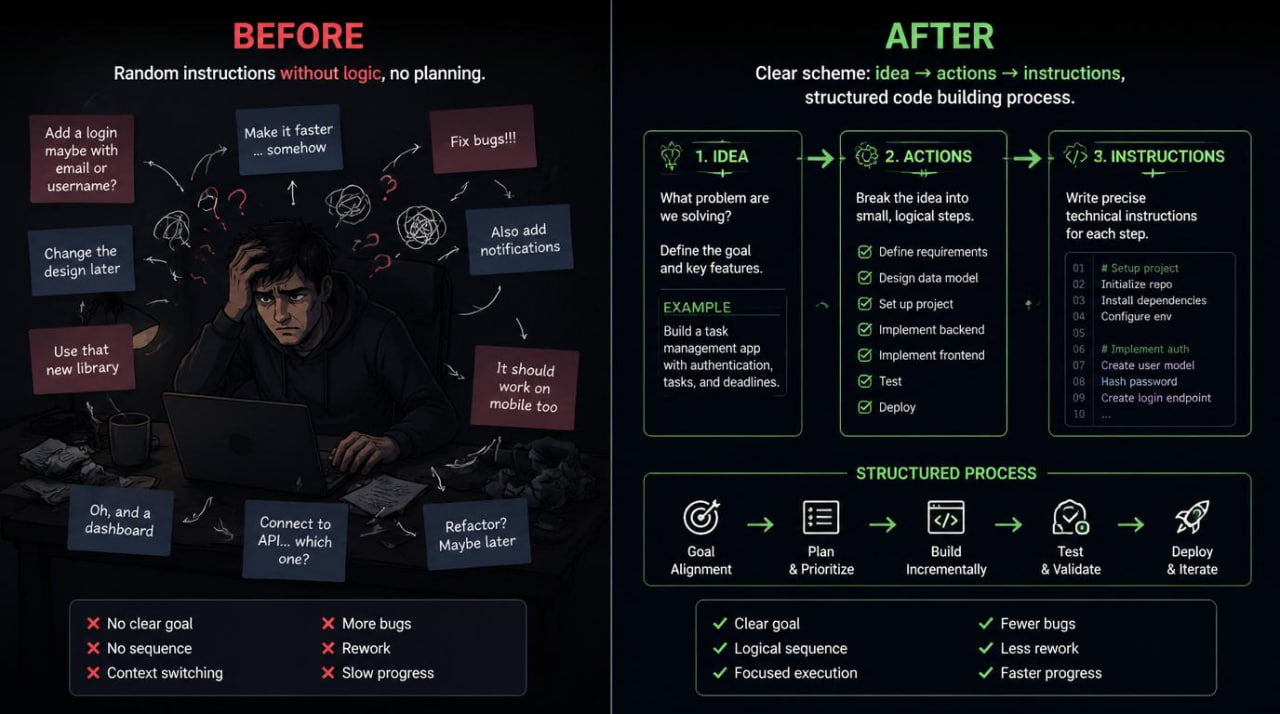
The materials are divided into modules so each topic has a clear place in the course structure.
-

Code Clarity
Each example explains what changes after an instruction and how it affects the code state.
-

State Tables
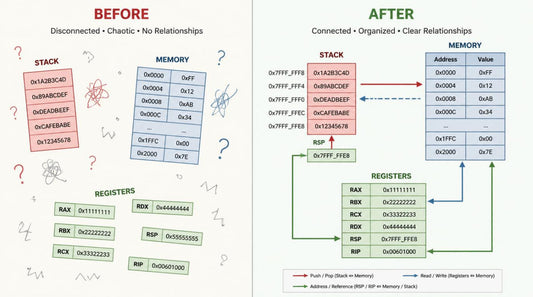
Tables help track
values in registers,
memory, and simple
code fragments. -

Offline Study
The materials can be downloaded and reviewed at your own pace without constant connection.


30-days refund guarantee
Learn on all device


Code that works closer to the core
Those who look beyond the interface
-

Lewys Douglas
Low-Level Systems Analyst
Works with analyzing
instruction behavior and
interaction with memory.
Often breaks down code
fragments into states to
track value changes. -

Tom Barton
Memory Mapping Specialist
Builds low-level structures
through logic and
instruction order. Works on
forming fragments from idea
to execution. Pays attention
to clarity and structure. -

Walter Valdez
Stack Operations Specialist
Works with stack logic and
temporary data storage.
Analyzes order of pushing
and retrieving values.
Studies stack interaction
with registers.


Look before you dive in

A clean entry point
Experiences from those who went through it
-

Noah Moore
Noah came to Novelcorex materials after several
attempts to understand registers, memory, and
basic Assembly instructions on his own.
The format with state tables worked well for him,
because each code step was reviewed separately.
“I liked that the material does not jump between topics, but moves through code in a steady sequence.” -

Daniel Cole
Daniel already had a technical base, but often lost the logic when a fragment included jumps, stack behavior, and several value changes. The structure of review was valuable for him: first the overall scheme, then the blocks, and only after that separate instructions.
“I started reading fragments not as a set of lines, but as an execution route.”


